Search Results
279 results found with an empty search
- My Interview with Professor Lopez: Bolshevism and the LGBT Lobby
In my recent interview with Professor Robert Oscar Lopez, we discuss parallels between the tactics and motives of the LGBT Lobby and the Bolsheviks in Russia a hundred years ago. Please listen by clicking here. The modus operandi of the LGBT lobby and the Bolsheviks are strikingly similar. But that’s the case with every power-grabbing scheme. A hundred years ago the Bolsheviks pretended to be the champion of the “workers.” Likewise, today statists call themselves the champions of gays and transgenders. It’s basically the same dynamic. The LGBT Lobby serves ultimately to consolidate power in the hands of the elite few. So what else do these movements have in common? The abolition of the autonomous family as the ultimate goal. Propaganda tactics that rely heavily on smear campaigns and cultivate the fear of becoming a non-person. Conformity of expression through obedience to political correctness. Replacement of free exchange of commerce and ideas with ironclad regulations and censorship Nomenklatura -- an elite clique in power -- rules over all and directs a mammoth bureaucracy The takeover of the media at the outset in order to control the narrative and silent dissenters That's just for starters. And if the "Equality Act" is passed by Congress, you can bet that compliance will be enforced and dissent will be punished. That's a censorship act window-dressed as non-discrimination. It has nothing to do with protecting any minority demographic. The minority demographic -- in this case gays, lesbians, transgenders -- are simply being used as pawns. Their grievances are being used as a pretext to consolidate all power into the hands of an elite mob. This is very much in keeping with the pattern of the Bolsheviks who cherry-picked winners and losers once they took on the mantle of "vanguard" -- or protector -- of the workers. The Bolshevik mob never cared about the working class, except as a useful propaganda tool in their bid to grab power. In the Soviet Union, those deemed "counter-revolutionary" would be labelled as "enemies of the people." We see the same pattern today with the LGBT lobby. And it will get much worse if the "Equality Act" goes into effect, giving the government the power to punish those it deems "anti-gay." So, at the end of the day, what have you got? Answer: a society ruled by elites, or a "nomenklatura." Your currency is political connections that you "earn" through compliance with the mob. That's how mammoth bureaucracies lock in power for their rulers. Instead of a society based upon the free exchange of goods, services, and ideas, you end up with gatekeepers -- all up and down the bureaucratic ladder -- who make sure the only kind of currency in use is political compliance and connections. In this sort of power structure all totalitarian societies poison personal relationships. They cultivate scarcity, which creates a nasty dog-eat-dog mentality. They cultivate ignorance so that free thought is dimmed. It's a divide-and-conquer scheme in which people become separated as never before. As history has proven time and again in such cases, it is submission -- and not resistance -- that is truly futile.
- When Discussing Censorship, We Should Always Point Out that it Isolates People
When journalist Matt Taibbi testified before Congress recently, he exposed further chilling information about the Censorship Industrial Complex – a group of elitist government and corporate actors – who claim they know best what information people should and should not be exposed to. They use various pretexts for doing so, such as protecting us from misinformation or hate speech. Taibbi, Michael Shellenberger, and others have done valiant work exposing censorship. As Taibbi points out, we are witnessing a class war in which a tiny sliver of elites intends to control everyone’s access to virtually all information. Obviously, this is tyranny. But I believe there is a critical point that we must never forget to stress in this argument: censorship is ultimately about isolating us from one another. If we want more people to understand what’s at stake, we must build awareness of the loneliness that arises from censorship. Censorship is isolating because it restricts whom we may and may not talk to. It nudges us into narrowing the circle of those we associate with. It’s tells us what we must think, and shuts down conversation. This might begin on a small scale, but when left unchecked, censors always push the envelop as far as they can. So it’s not a stretch to say that censorship atomizes us, and essentially boxes us into a form of solitary confinement. This is the essence of the thesis in my book The Weaponization of Loneliness. Only if people understand censorship in those terms can the argument against it resonate on a more effective, more personal level. It’s not as much an abstraction. People can relate to the discomfort of shutting up in compliance with political correctness. They can relate to the fear of ostracism behind it all. So when we become aware of that trap, we’re more motivated to do something about it. There is no alternative to non-compliance with censorship regimes. To comply is akin to getting into the trunk of a car at gunpoint. Nothing good is going to happen to you in that trunk. It’s a fight-or-flight situation. And if you can’t flee, your only choice is to fight because the Censorship Industrial Complex that Taibbi and others have exposed has shown that it can never be trusted. It will keep you locked in solitary if it can. I hope to follow up soon with another post that provides a specific “to-do list” of fighting the ill effects of censorship and the loneliness it breeds in us.
- The Main Purpose of Censorship is to Isolate People in Order to Control Them
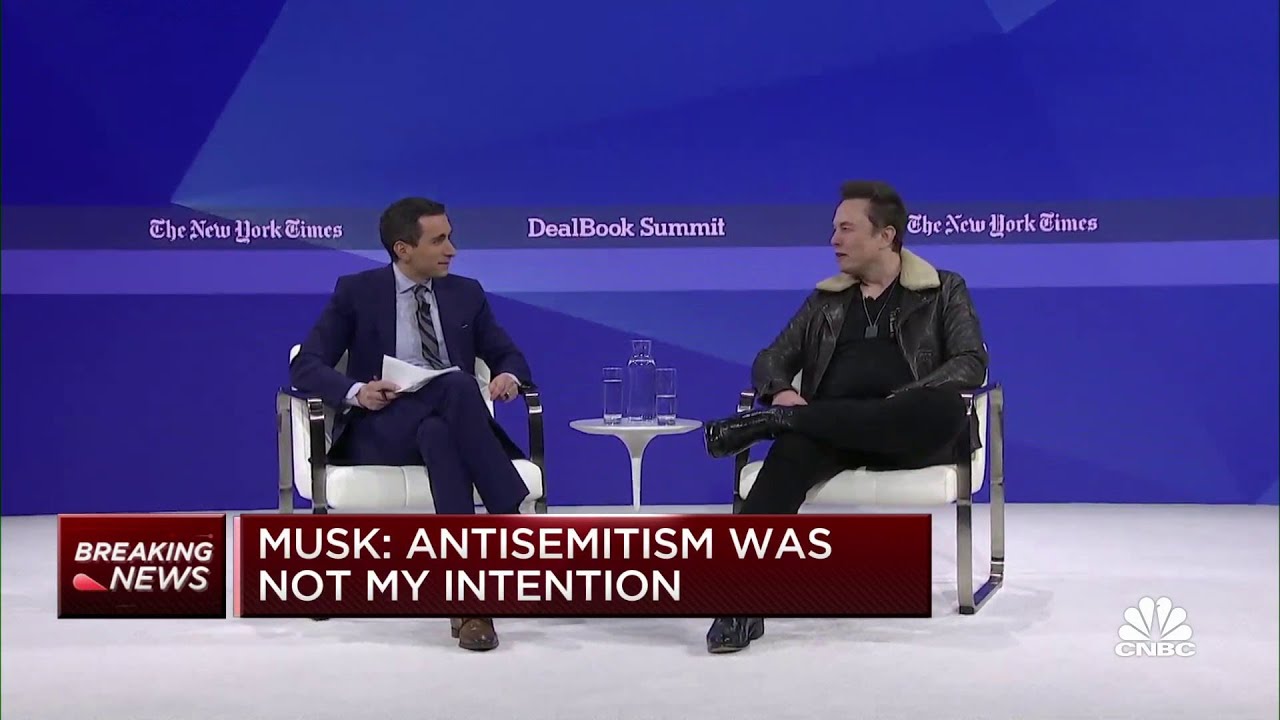
Elon Musk recently stated that he would not bend to advertisers who are boycotting Twitter (or “Twittex” as I refer to it now.) He repeatedly responded that they can “go f**k themselves” before he will cave to their attempts to blackmail him into suppressing free speech. So far, it appears that Musk is holding to his word about making sure Twittex is a free speech platform. I confess to some skepticism about Musk’s ultimate intentions (especially when it comes to transhumanism), but I am cheering on his refusal to bend to the demands of anti-speech elites. (And, by the way, I have an aversion to the gross normalization of the F-word, too.) But I’d like to make some critical points we too often miss about the evils of censorship: Number 1: Censorship atomizes us. Number 2: It thus softens the ground for social engineering that leads directly to totalitarianism. This is exactly why the First Amendment prohibits the government from abridging the right to free expression. Without free speech, free association erodes. Then free thought atrophies. As documented in neuroscience, social isolation can change the anatomy of the brain. And if censorship is not constantly kept in check, civil society dies. If we understood censorship in light of the atomization it produces, I think we’d be better equipped to fight it and to see through the censors’ flimsy pretexts of fighting “hate speech” or “disinformation.” So, let’s never forget that the ultimate purpose of censorship is to atomize us, to isolate us from one another. When we can’t speak openly to one another, we cannot get to know one another. In a society in which censorship reigns, we’re cut off from others – often through the fear of being demonized if we say the “wrong” thing – and we’re thereby cut off from the cross-pollination of ideas. Our minds then wither, and we end up living in compliance with tyranny, in a zombie-like state. I didn’t make this up. It’s the proven pattern throughout the bloody history of totalitarianism. I trace it in the historical chapter of my book, The Weaponization of Loneliness. It’s what the Bolshevik war on private life and Stalin’s reign of terror was all about. It was the whole purpose of Mao’s Red Guard mobs during the Cultural Revolution. Ironically, we tend to comply because of the fear of isolation and yet mass compliance only invites even deeper isolation across society at large. The only antidote is non-compliance with censorship regimes. How? I’ll explore that in my next post.
- A Wide-ranging Conversation about Social Isolation with Bill Walton and Mark Tapscott
There continues to be substantial interest in the phenomenon I discuss in my book The Weaponization of Loneliness. (Even Hillary Clinton seems very interested!) One of the most comprehensive interviews I've done on the book is the one below hosted by Bill Walton on his show with Epoch Times editor Mark Tapscott and me delving into the topic. I love doing one-on-one interviews, but having someone else's voice and perspective can really help with a deep dive into the material. Mark is an amazing thinker and observer who touches on a lot of great points in this interview. Bill Walton opens by correctly noting that the surgeon general's advisory on loneliness is (as I've written) just another excuse for government intrusion into the private sphere of life. This interview lasts about an hour, but we cover a lot of ground, so if you're interested in the topic, please give it a listen (and subscribe to the amazing Bill Walton Show while you're at it!)
- This great article in American Greatness can help average Americans start taking their freedom back
"Util Lambs Become Lions" is a fantastic article in the online magazine American Greatness. It is one of many excellent reads out there, but for most people such reads are not so easy to find. Because of growing media and tech censorship -- and extreme bias -- we face more roadblocks to finding real information. We are inundated with propaganda that's growing more vicious by the minute. Nevertheless, if you look carefully, you can find many insightful essays online that expose readers to the truth and cut through the confusion of identity politics and cancel culture during these insane times. This is just one of them. I am sharing this particular essay by a retired marine officer, Max Morton, because he gives everyone the big picture. With clarity. His essay is a 30,000-foot view of where we are as a nation as well as where we need to be headed if America is ever going to win back its hard-won freedoms. It provides average Americans a good start for understanding what's at stake and what we can do about it. And it goes beyond both hope and despair. Morton describes our current landscape in about 2000 words and five salient subtitles: What we are facing; How did we get here? Developing an Agenda; What lies ahead; and Building the Barricades. The piece is sobering and hopeful at the same time. How do we recover from so many toxic trends in all of our institutions? Especially when those who are poisoning us have isolated us and are circling the wagons? How can we hope for Americans to regain the ability to relate to one another as human beings, rather than as enemies? It's going to take a lot of courage by a lot of people to overcome the descending darkness. It's going to take a lot of one-on-one building of strong relationships of trust and building of strong communities against forces that are committed to breaking up such relationships. The work towards renewal has to happen fast. It's too late for anything else. We have the means. But do we have the will? Here's an excerpt from the beginning: In order to defeat this rebellion, we need to understand the terrain we are operating on and the strategy and tactics of our enemy. Even more important, we need a strategy of our own to guide our struggle and return to a functional representative government, bounded by the Constitution with the power fully vested in the people. Only a few decades ago, American politics was driven by shared interests of prosperity and well-being aligned with a free constitutional republic. We need to drive from the American consciousness the current docile acceptance of the fact that America has a ruling class—or a ruling elite—and we must banish these terms to the trash heap of racial epithets and aristocratic garbage. And here's the conclusion: At this moment we are the weaker side in this asymmetric struggle. Right now, we are 80 million couch potatoes and keyboard warriors with rifles in our bedroom closets. This is not a force to be reckoned with. And the ruling elite know it because they control the information flow and own the power institutions. Traditional Americans will have to organize and band together to help each other and fight in this struggle. When we become 80 million strong, organized citizens with a tangible agenda, when we know where we want to go and what we want this country to look like, and when we can see the path to achieve this, only then will we become the lions we need to be to achieve victory. Please read Morton's entire article in American Greatness by clicking here: Until Lambs Become Lions.: Until Lambs Become Lions.
- Kate Millett's "Feminism:" A Vehicle for Totalitarianism
Mallory Millett published a fascinating essay this past week in Front Page Magazine. Entitled “Marxist Feminism’s Ruined Lives,” it’s about how her sister Kate Millett, author ofSexual Politics (1970) went about organizing a totalitarian movement which she labelled as a form of “feminism.” Mallory describes how Kate invited her to a meeting with about a dozen other women in the late 1960’s. Here’s an excerpt: They called the assemblage a “consciousness-raising-group,” a typical communist exercise, something practiced in Maoist China. We gathered at a large table as the chairperson opened the meeting with a back-and-forth recitation, like a Litany, a type of prayer done in Catholic Church. But now it was Marxism, the Church of the Left, mimicking religious practice: “Why are we here today?” she asked.“To make revolution,” they answered.“What kind of revolution?” she replied.“The Cultural Revolution,” they chanted.“And how do we make Cultural Revolution?” she demanded.“By destroying the American family!” they answered.“How do we destroy the family?” she came back.“By destroying the American Patriarch,” they cried exuberantly.“And how do we destroy the American Patriarch?” she replied. “By taking away his power!” “How do we do that?”“By destroying monogamy!” they shouted.“How can we destroy monogamy?” Their answer left me dumbstruck, breathless, disbelieving my ears. Was I on planet earth? Who were these people? “By promoting promiscuity, eroticism, prostitution and homosexuality!” they resounded. They proceeded with a long discussion on how to advance these goals by establishing The National Organization of Women. You ought to read the whole thing. At this stage of her life, Mallory, having seen the hurt and cruelty pushed by the agenda of her sister, says she's come to identify with the daughter of Joseph Stalin in speaking out against the harmful work of a family member. It's strange indeed how a small coterie of privileged women like Kate Millett (educated at Columbia and Oxford) would go about ruining and trying to control the lives of everybody else. In fact, I find it hard to believe such women -- so enamored of totalitarianism -- really look down at all on the idea of patriarchal domination. More likely, they've adopted the mindset they pretended to abhor, and have now become that patriarchy.
- Rush Limbaugh's Discussion of my "Mass Delusion" Essay
Yesterday Rush Limbaugh talked at great length about my recent article in The Federalist: “How to Escape the Age of Mass Delusion.” As you can imagine, I was thrilled to see this topic get exposure to such a wide audience. Because, as I’ve said before, it is absolutely key that we understand the processes and methods of coercive persuasion if we are ever going to be able to defeat them. Let’s set aside the swirling mess of issues for a little while — Obamacare, Common Core, climate change, immigration, marriage, transgenderism, and on and on and on and on . . . . Those pushing “transformation” know that pitching us this vortex of chaos is a critical element in the game of attrition they are playing with us. So I propose that we should instead focus on the Machinery itself. What exactly drives the propaganda machine and how does it work on us? I fear that people of goodwill have been in the dark about these dynamics for too long. Let’s shift focus and look behind that curtain. Because we’re dealing with a war on reality itself. You and I know that we’re not in Kansas anymore. Here is the link to the text of Rush’s lengthy commentary related to my article: http://www.rushlimbaugh.com/daily/2015/06/15/our_overnight_orwellian_unraveling
- Here's a Try at some 2020 Foresight -- on Human Interaction
Hi. I’m back. I thought I’d write one post just before 2019 bites the dust. Yes, it’s been a long hiatus since I posted the video of Marshall McLuhan explaining how “the medium IS the message.” Maybe I’ll explain the hiatus in a future post. In the meantime, going into 2020, I’d like to pick up on where I left off with McLuhan. Consider his amazing insight: that we are shaped more by the environment a medium creates than by the content within the medium itself. So here’s a little thought experiment. Imagine you cross paths with someone you know to be a nasty troll on Twitter, but the person doesn’t know you know that. You strike up a friendly conversation. Maybe you just ask a question about something local, perhaps the parking situation outside the coffee shop or store you’re in. The person might still be “off.” But I think your face-to-face experience would be very different and likely more positive than any experience contaminated by the environment of social media. Why is that? McLuhan might say that it is because media -- especially electronic media -- take us out of our natural human context. Media environments set us up more easily for deception too, because they conceal parts of the big picture of whole human interaction. For example, when someone’s on an audio phone call, they can roll their eyes without offending the listener no matter who it is. And people driving down the highway feel freer to honk (or worse) showing annoyance with other drivers. This is not news, of course. We treat people differently in environments that provide more anonymity than we do face to face. Even simple written communication causes a lot of human context to get lost, including texting. We lose the big picture: mood, tone, eye contact, body language, nuances, true intent. So it’s no wonder Twitter is such a cesspit. There are no real rules of decorum and a lot of anonymity, which is a nasty combination. (Twitter’s censorship policies are, of course, purely political and not about maintaining any sort of decorum) Anonymity can be a good thing, just as privacy is. But anonymity does not make for the building of personal relationships. Or community. So the foresight going into 2020 is that a better world depends in large part on the health of our personal associations. Which in turn depends on more direct communication. A big key is to understand that loneliness -- or fear of social rejection -- is often the root of a lot of negative behavior in people. Maybe you feel as much as I do that 2020 will be a pivotal year with some strong headwinds ahead. If so, one resolution might be to cut back on the digital stuff and increase more direct communication with others. And let's all resolve to have a happy new year.